Guides
How to read Home in Crawlbench
Use coverage, trends and your searches on Home to know whether your team is catching listings or needs to act.
Guides
Use identity, price, year and excluded words so your listings stay easy to review instead of flooded.
Set Crawlbench filters as a written buy box: identity first, then economics, then exclusions. The goal is a short match queue you trust, not maximum Marketplace volume.
If half your alerts are accessories, salvage, or the wrong year, the filter stack is wrong, not the product.
For vehicles, prefer make and model fields when the wizard exposes them. Keywords catch misspellings later. For electronics, lock one SKU family per monitor.
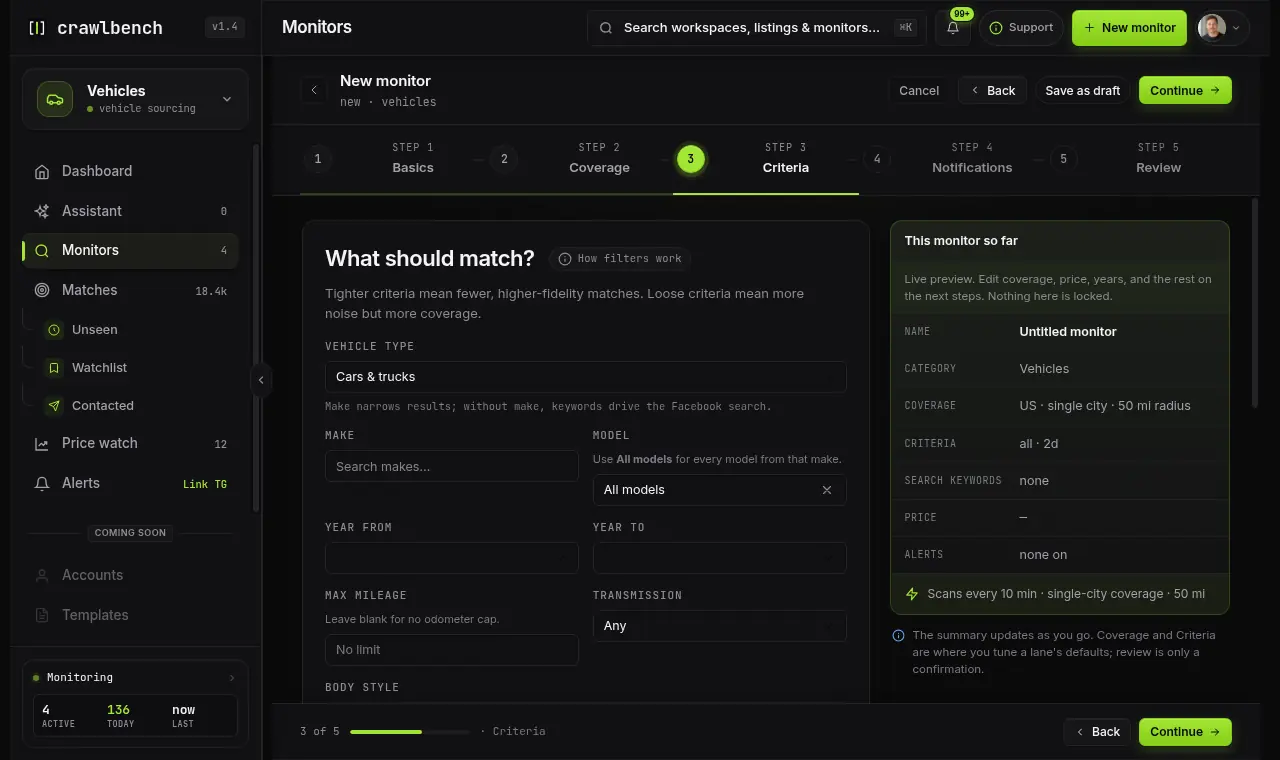
A make/model gate fails bed covers and "looking for a Tacoma" posts that a bare keyword would pass.
Set the max price to today's walk-away number, not last year's dream. Pair it with a year floor (vehicles) or condition constraints so $800 typos for late-model stock do not look like deals.
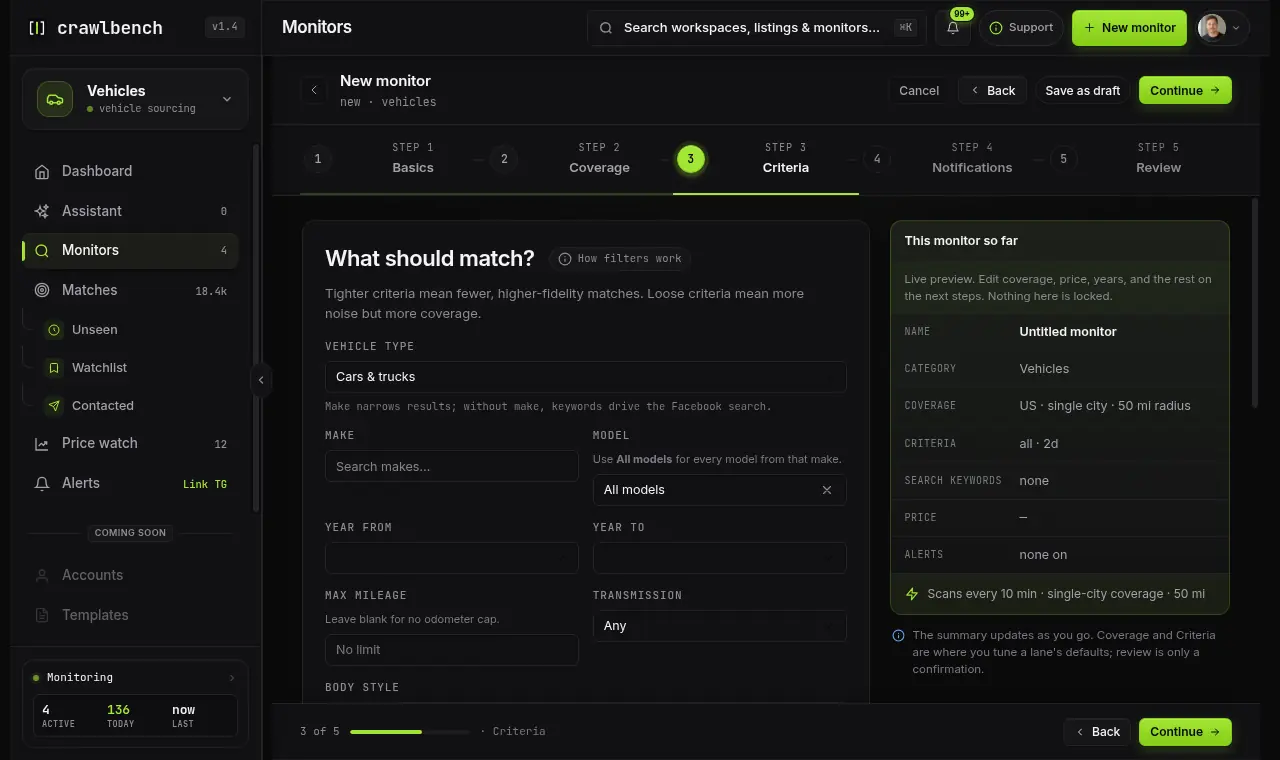
Add the phrases you always skip: salvage, parts only, blown motor, iCloud locked, room for rent, guaranteed ROI. Exclusions save more time than shaving another $500 off the price cap.
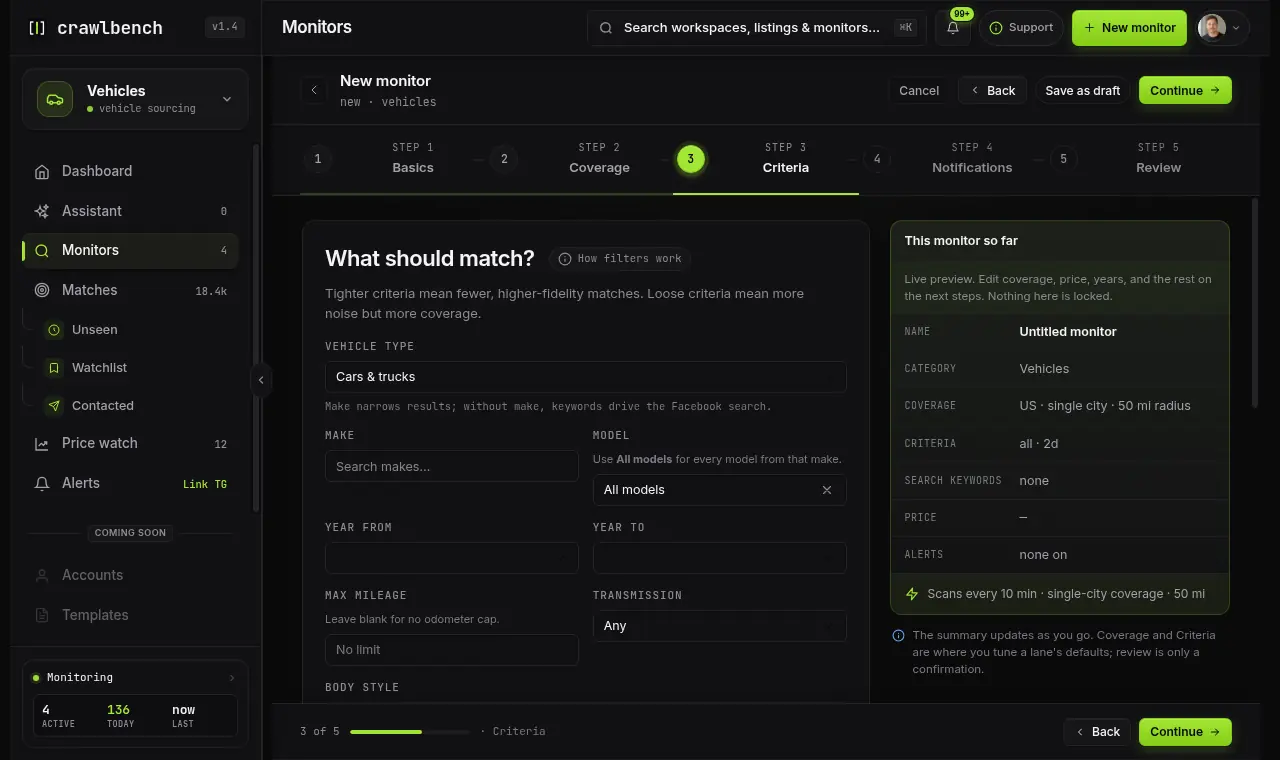
Change one dimension at a time after a week of junk. If you tighten price, year, and exclusions in the same edit, you will not know what fixed the queue.
When a listing passes, Crawlbench stores match reasons at ingest. In the matches UI you can see why the row cleared the gate. Use that feedback to tighten the next edit.
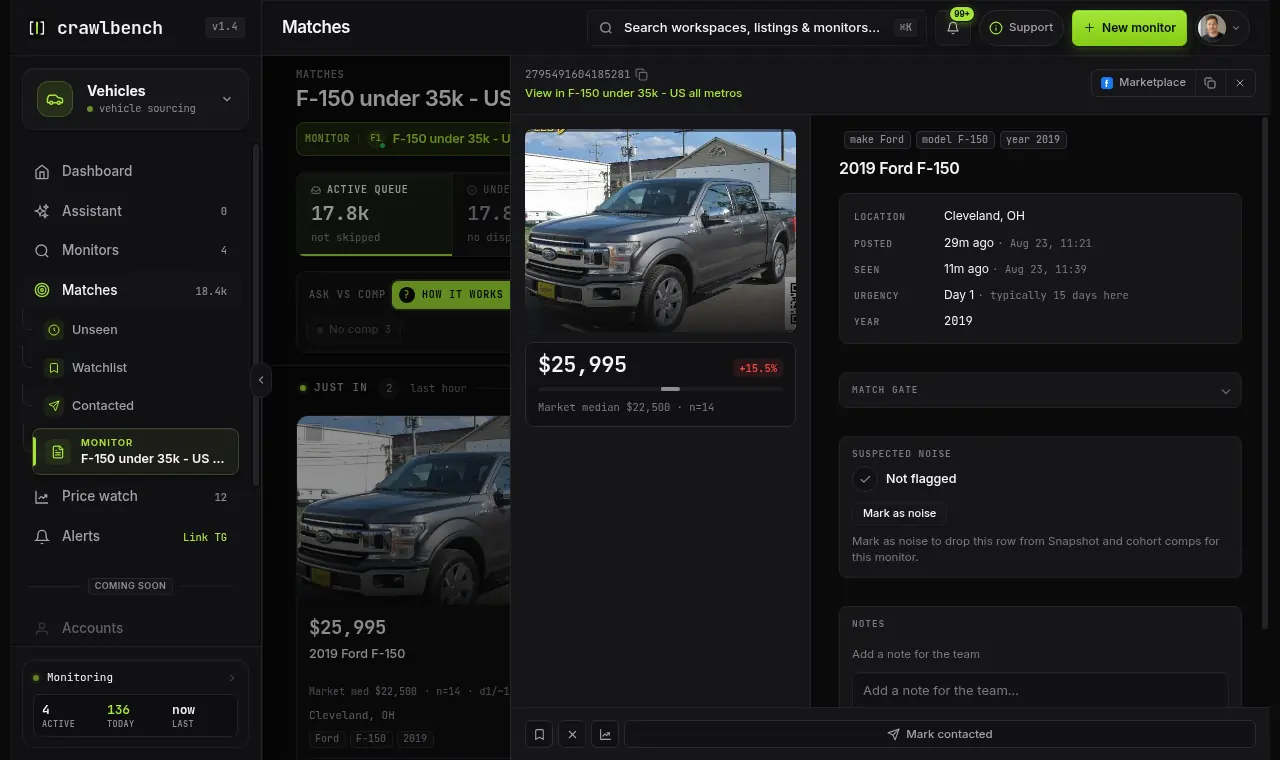
Filter edits affect new ingests. A listing already matched stays until you see it again under the new rules.
If Home's New tab is empty but coverage is healthy, it may say "Nothing passed today". That means a search checked listings today and left every one of them out. The line names the search that left out the most, how many it checked and what left most of them out, such as "180 were over your price of $22,000", and offers Edit for that search.
Loosen the dominant filter first. Do not rewrite every field in one edit. The line shows only when we hold counts for the day, a listing read again on a later check counts again, and the day is the UTC day.
Then open how to triage matches and keep the queue under two minutes per batch.
Guides
Use coverage, trends and your searches on Home to know whether your team is catching listings or needs to act.
Guides
Read why each listing passed, hide what you would never buy, then message the seller on Facebook or save it for later.
Guides
Save Facebook Marketplace listings to follow their price. Set a target, compare with the usual price, and get an alert when the seller cuts.

Crawlbench compares each new listing with similar ones nearby and alerts you when a good one appears. Your first search goes live at signup.
Free for 24 hours. No credit card.